

 +48 576 425-292
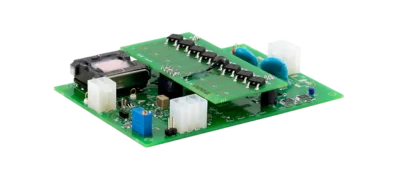
QBD-series Pockels cell drivers


Applications
- Q-switching
Features
- Push-up or pull-down modifications (fixed)
- Up to 6 kV output voltage
- Up to 100 kHz repetition rate
- < 20 ns rise time or < 20 ns fall time (leading edge)
 Download manual (430 kB)
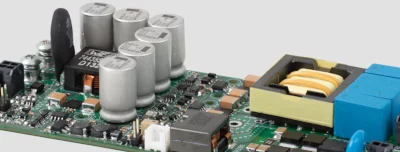
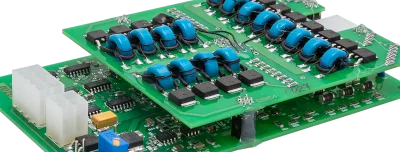
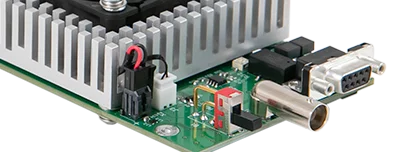
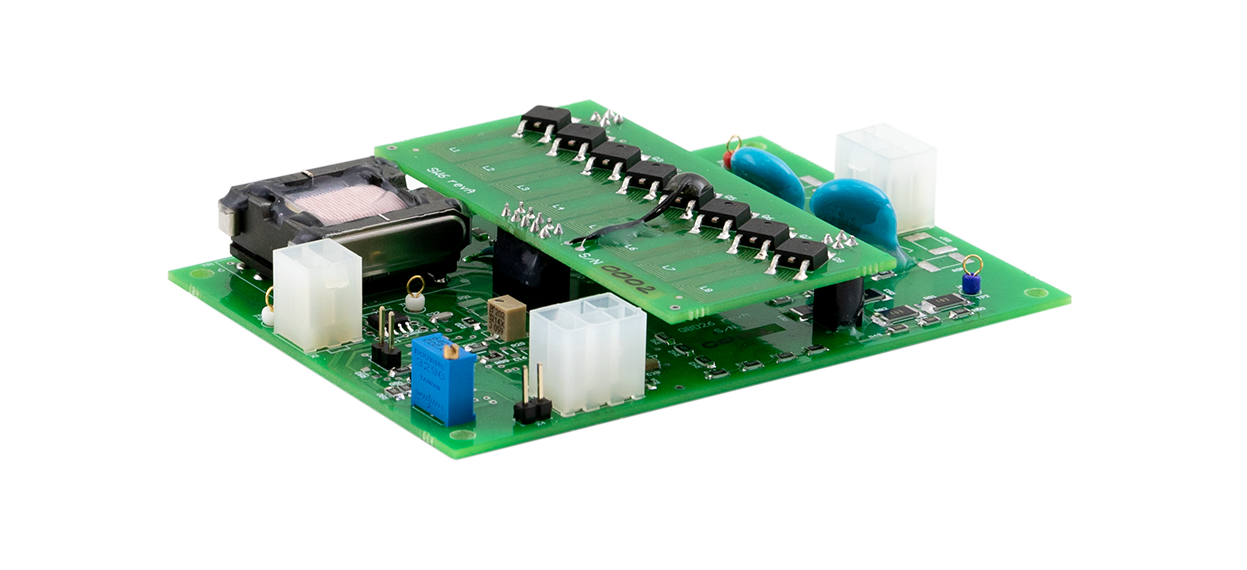
QBD-series consists of several Pockels cell Q-switch driver circuit boards that differ with output voltage range (up to 6.0 kV bipolar) and operating scheme (see also How to order? section). Please, note that by bipolar device an output pulse voltage U is formed by applying +U/2 to positive output wire and –U/2 to negative.
QBD-series is specially for the control Pockels cells by applying a fast switching high voltage. The modules require +24 V DC power supply and pulse generator to set an operating frequency. An output voltage level can be programmed in working range by user either manually (through onboard configuration trimpot) or remotely (applying a DC voltage to the respective pin).
There are two possible modifications of output signal type:
- push-up (= normally off scheme), when a base voltage level equals to zero
- pull-down (= normally on scheme), when pulses from base bias voltage to ground are generated.
The desired one should be chosen at the time of ordering and could not be changed by user.

QBD-series is based on MOSFET technology and offers high repetition rates and fast transition time for a leading pulse edge. The recovery time by QBD Q-switch driver is relatively long (5‑10 μs for the trailing pulse edge vs < 20 ns by QBU).
Performance
For instance, QBD-5020-UP/DN kept cool enough and running with proper load (Pockels cell with 5-7 pF capacitance plus 30-50 cm connection cable) has typical performance as below:
(*) The values are approximate, exact performance depends on actual load capacitance and cooling conditions.
In burst mode (i.e. for short term operations) the performance increases approximately twice and exceeds 100 kHz at low operating voltages and low load capacitances.
The performance deteriorates for higher load capacitance.
You may also be interested in other Q-switch driver models:
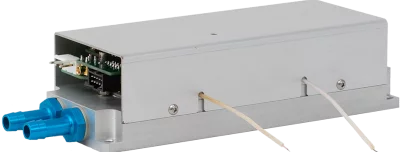
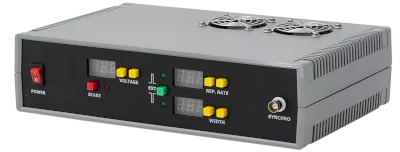
| Compact driver, up to 4 kV | Encased driver | Driver with fast rise and fall |
 |
 |
 |
Input:
Output:
or push-up (= normally off)
Environment:
Other:
2) 10-90% level, guaranteed at load capacitance 23 pF and below
Pull-down (normally on) modifications
Model *
Description
2.4-6.0 kV high voltage adjustment range
2.0-5.0 kV high voltage adjustment range
1.6-4.0 kV high voltage adjustment range
1.2-3.0 kV high voltage adjustment range
0.8-2.0 kV high voltage adjustment range
0.4-1.0 kV high voltage adjustment range
(*) Other output voltages are available on request
Push-up (normally off) modifications
Model *
Description
2.4-6.0 kV high voltage adjustment range
2.0-5.0 kV high voltage adjustment range
1.6-4.0 kV high voltage adjustment range
1.2-3.0 kV high voltage adjustment range
0.8-2.0 kV high voltage adjustment range
0.4-1.0 kV high voltage adjustment range
(*) Other output voltages are available on request
Example
2.0-5.0 kV high voltage adjustment range
Download user manual (430 kB)
Download STEP model (ZIP archive, 3.2MB)